Arusha National Park lies in the northern region of Tanzania, not far south from the Kenyan border and just outside the city of Arusha. Covering 53 square miles (137 sq km), it stands as one of Tanzania’s smaller national parks and among Africa’s compact reserves.
Often regarded as a companion park to Kilimanjaro, situated eastward, visitors frequently explore both parks, especially those drawn to mountain landscapes.
Mount Meru, Tanzania’s second-highest peak following Kilimanjaro, ascends to 14,968 feet (4,562 m), notably shorter than its renowned neighbour. Clear days afford views of each mountain from the other. Mount Meru, a dormant stratovolcano, ranks as Africa’s fifth tallest.
Despite its modest size by national park standards, Arusha National Park teems with natural diversity. Its three distinct regions include the Meru Crater in the west, which channels runoff into the Jekukumia River, with its summit perched atop the crater’s rim.
The southeastern expanse hosts the Ngurdoto Crater, featuring a flourishing grassland ecosystem. To the northeast, the Momella Lakes attract a multitude of bird species drawn to the burgeoning algae.
The surrounding mountain base forest shelters diverse wildlife and a plethora of bird species, making it a haven for birdwatchers with approximately 400 recorded species.
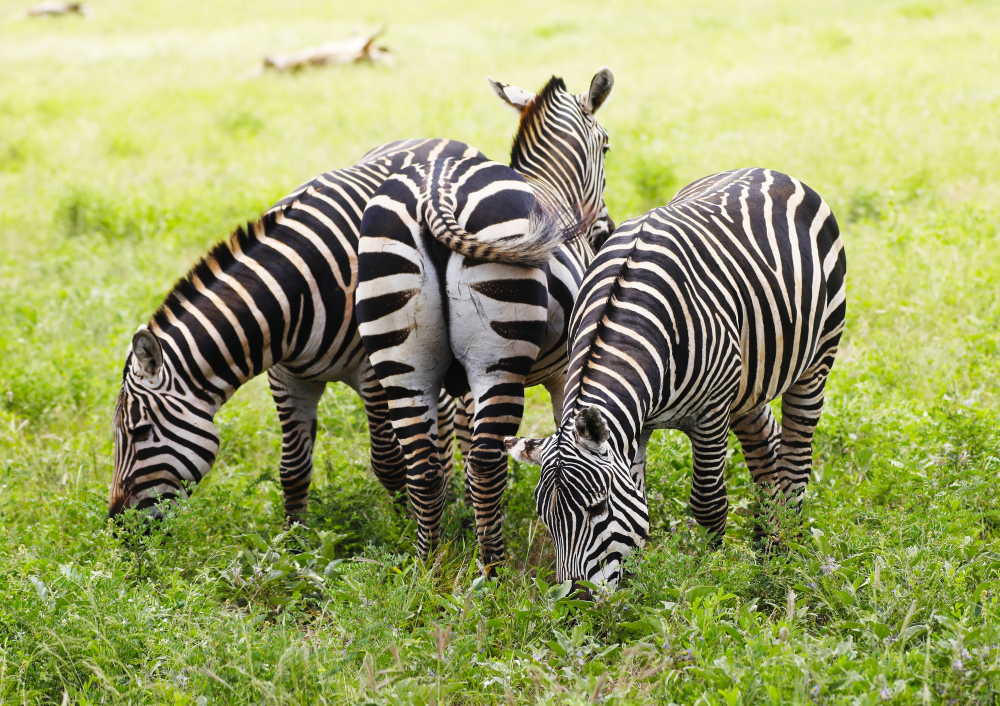
Among the park’s wildlife are black and white colobus monkeys, buffalo, bushbuck, elephants, warthogs, and zebras. While leopards roam the area, spotting them proves challenging.